 Sylva Botanical Journal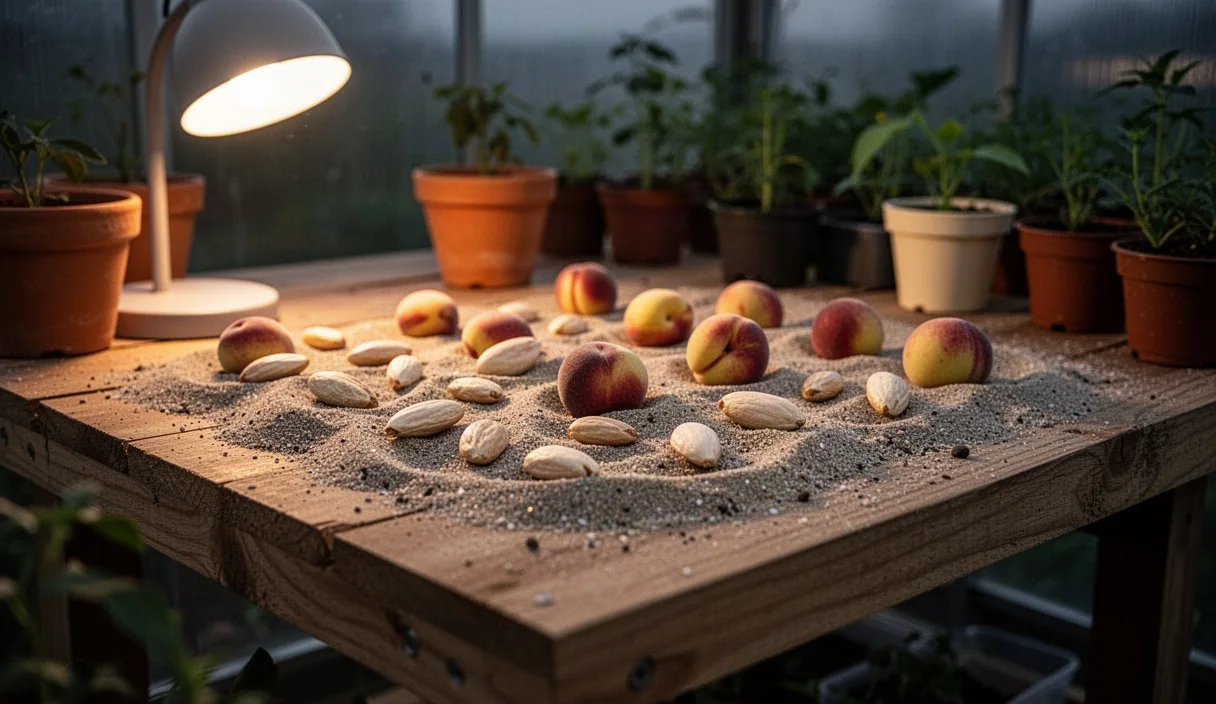

The propagation of temperate stone fruit rootstocks and wild accessions relies upon overcoming an evolutionary compromise between embryonic protection and timely vernalization. Species within the genus Prunus, encompassing wild plums, peaches, sour cherries, and apricots, protect their seed inside a heavily lignified endocarp. While this wooden hull guards the kernel against soilborne pathogens and untimely physical crushing, it creates a formidable physiological and mechanical barrier that nursery managers cannot bypass through simple warm-season hydration. True germination requires systematic winter simulation under controlled atmospheric conditions.
Subjecting stone fruit kernels to uniform low-temperature moist stratification aligns the biochemistry of the dormant embryo with field sowing windows. When applied with precision, the protocol attenuates endogenous germination inhibitors, softens maternal tissues, and induces the metabolic synthesis required for radical elongation. The process demands methodical attention to moisture tensions, gas permeability, and microflora management, for an error in substrate hydration or thermal holding will rapidly cause anoxic fermentation or pre-emergence rot long before spring sowing equipment enters the field.
Endocarp Physiology and Dormancy Mechanisms
The anatomical unit commonly called a stone fruit pit is an integrated structure consisting of a sclerified pericarp layer, known as the endocarp, enclosing one or occasionally two true seeds. Within this boundary, the seed possesses its own testa, an endosperm reduced to a thin film, and a well-differentiated embryo. Dormancy within Prunus species is classified as physiological and, to varying degrees depending on the taxon, morphophysiological. The lignified endocarp imposes mechanical resistance against radicle protrusion and retards gas diffusion, yet the primary inhibition resides directly within the embryonic tissues and the surrounding inner seed coat.
Dormancy maintenance is governed by a dynamic balance between abscisic acid (ABA) and gibberellic acids (predominantly GA4 and GA7). High endogenous levels of free ABA in the cotyledons and embryonic axis suppress transcription of enzymes required for cell wall loosening and lipid catabolism. During the chilling period, catabolism of free ABA into phaseic acid and dihydrophaseic acid accelerates under cold-activated oxidases. Concurrently, biosynthesized gibberellins accumulate, priming the embryonic cells for mitotic division. Water must be present throughout this transition; dry kernels held at chilling temperatures show zero movement in their internal hormone ratios.
The resistance of the endocarp itself varies noticeably across cultivated species and rootstock selections. European plums (Prunus domestica) and blackthorn (Prunus spinosa) feature dense, thick suture margins that demand protracted weathering or intentional scarification to allow adequate oxygen uptake by the inner seed. In contrast, peach (Prunus persica) and sour cherry (Prunus cerasus) exhibit lighter or more porous endocarps, which admit water relatively quickly but remain susceptible to internal mold proliferation if saturated beyond their capillary capacity.
| Species | Primary Dormancy Barrier | Endocarp Characteristics | Baseline Chilling Requirement (Hours below 7°C) |
|---|---|---|---|
| Prunus persica (Peach) | Embryo physiological | Deeply furrowed, moderately thick, variable split-pit tendencies | 950 to 1250 |
| Prunus cerasus (Sour Cherry) | Physiological with endocarp restriction | Smooth, dense, small internal air volume | 1200 to 1500 |
| Prunus domestica (Plum) | Morphophysiological and mechanical | Thick, fused margins, high lignin content | 1100 to 1400 |
| Prunus dulcis (Almond) | Mild physiological | Porous, thin, rapid water penetration | 350 to 600 |
Selecting and Sanitizing Clean Kernel Lots
The preparation of seed stock determines the margins of loss across the chilling period. Pits gathered from processing waste or pomace often harbor mechanical lesions, latent monilinia infections, or incomplete embryos caused by premature fruit picking. Prior to storage or stratification, seed lots must undergo density grading in water. Mature, well-filled stones sink promptly, whereas aborted kernels, internal insect damage from curculio larvae, and empty hulls float to the surface. Floating lots should be skimmed off and discarded without hesitation; retaining them introduces pockets of decay into the stratification medium.
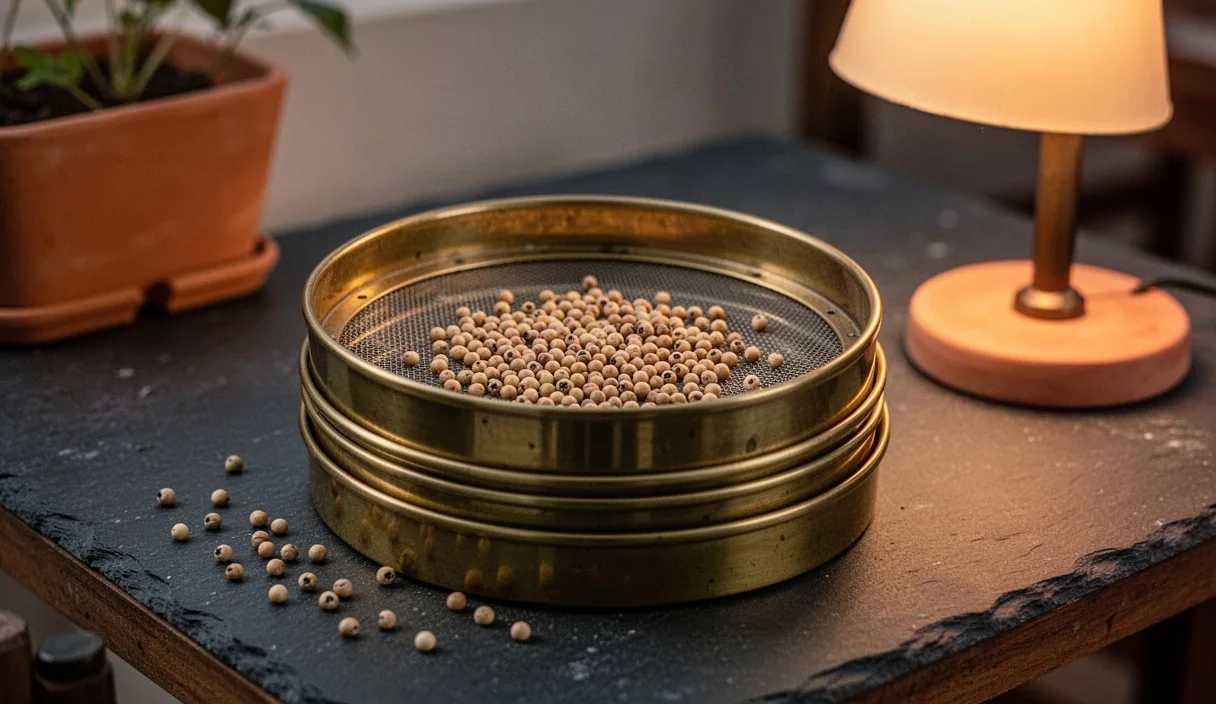
Once graded by weight, the outer surfaces of the stones must be freed of all organic pulp residues. Pectin and sugar residues serve as growth media for ubiquitous saprophytic molds, primarily species of Penicillium, Aspergillus, and Mucor. Pits are tumbled in water or scrubbed across wire screens, rinsed exhaustively, and then immersed in a sanitizing bath. A sodium hypochlorite solution mixed to an active concentration of approximately 0.5% available chlorine provides an effective surface sanitization when applied for ten to fifteen minutes under continuous agitation.
Following chlorination, the stones require thorough rinsing in clean potable water to purge residual hypochlorite salts from the furrowed crevices. For valuable accessions or rootstock lines known to carry deep-seated fungal hyphae within the suture line, an additional dip in a commercial captan or fludioxonil suspension may be employed according to label instructions. Chemical treatment, however, cannot substitute for physical cleanliness; if organic matter remains glued to the endocarp, chemical efficacy drops precipitously.
Moisture Regulation in Perlite and Peat Substrates
Stratification media function as reservoirs for water and oxygen, rather than sources of nutrition. An ideal matrix balances water-holding capacity with high macroporosity, guaranteeing that the kernel maintains internal turgor without suffering oxygen starvation. Horticultural grade coarse perlite mixed with light, coarse-fibered sphagnum peat moss remains the professional standard. A volumetric ratio of three parts coarse perlite to one part shredded peat moss offers predictable performance. Sand, while historically popular, settles under repeated condensation cycles, compressing into an airless stratum that suffocates stone fruit embryos.
Substrate moisture must be calibrated before introducing the seed lot. A reliable working metric is gravimetric moisture content adjusted until the blended medium holds water without yielding free droplets when squeezed firmly in the fist. If water runs between the fingers under hand pressure, the mixture is overly saturated and must be cut with additional dry perlite. For technical bench work, maintaining the substrate between 40% and 48% total moisture content by weight preserves sufficient atmospheric water vapor inside the storage container while retaining at least 25% air-filled porosity.
- Substrate aeration: Coarse perlite particles create interstitial voids that allow continuous diffusion of metabolic carbon dioxide out of the container and fresh oxygen inward.
- Peat buffering: Sphagnum peat lowers the ambient substrate pH to between 4.5 and 5.5, an acidic range that discourages widespread bacterial proliferation without hindering embryonic enzyme systems.
- Uniform mixing: Ensure the seeds are thoroughly distributed throughout the media rather than layered together in clumps, which facilitates localized fungal outbreaks.
Storage containers must allow gas exchange without permitting unmitigated desiccation. Heavy-gauge polyethylene bags measuring between 4 and 6 mils in thickness provide an effective balance; they transmit oxygen and carbon dioxide molecules slowly while retaining internal humidity. If rigid plastic lugs or crates are used, drill ventilation ports along the upper rims and cover the surface with a loose sheet of polyethylene to avoid moisture loss around the edges of the flat.
Managing Temperature Curves Over Twelve Weeks
Stratification of stone fruits does not occur under static thermal conditions in natural settings, and commercial operations benefit from managed temperature manipulation. While traditional literature suggests holding seed at a continuous 4°C, modern nursery schedules use a structured twelve-week curve that reflects the biochemical requirements of distinct stratification stages. A common and destructive mistake is to place dry pits directly into a freezing environment; true stratification requires hydration, followed by sustained non-freezing cold, before any sub-zero conditioning is introduced.
The first fourteen days should focus entirely on slow, deep hydration. The sanitized, blended medium containing the seed lot is held at 10°C to 12°C for two weeks. This warm-moist incubation encourages the stone to imbibe water thoroughly through the micropyle and allows initial metabolic activation within the cotyledons. Skipping this short warm period often delays the start of ABA catabolism, particularly in varieties possessing exceptionally hard, thick endocarps such as late-season European plums.
Following warm imbibition, the temperature is dropped cleanly into the vernalization zone, ideally holding between 2°C and 4°C for the subsequent eight weeks. Within this narrow thermal window, the degradation of ABA reaches maximum velocity, while fungal pathogen replication slows significantly. Temperatures exceeding 6°C during this mid-phase run the risk of halting the vernalization register, resetting embryonic dormancy clocks in what is known as secondary dormancy. Conversely, holding the matrix below 0°C at this juncture stops physiological stratification, because frozen cellular water cannot facilitate enzyme transportation.
During the final two weeks (weeks eleven and twelve), the ambient room temperature is regulated precisely at 1°C to 2°C. This marginal reduction serves as a holding measure. It maintains the biochemical state of readiness achieved during the primary chilling phase while preventing the radicles from elongating rapidly before field soils warm to acceptable working conditions.
Identifying Radicle Emergence Before Mechanical Sowing
Direct inspection of the seed lot must occur on a weekly basis from the eighth week onward. Nursery managers should sample kernels from both the periphery and the center of the containers to verify progress. The first anatomical indicator of readiness is the splitting of the endocarp suture, driven by internal hydrostatic pressure generated by the swelling cotyledons. Shortly thereafter, the tip of the white radicle will breach the seed coat at the micropylar end.
The optimal threshold for terminating cold stratification occurs when approximately 8% to 12% of the kernels display visible radicle tips protruding between 2 and 5 millimeters from the split shell. If one waits until the majority of the lot has extended roots, mechanical sowing becomes impractical. Emerging radicles are brittle, lacking secondary lignin; standard seed drills, vacuum plates, and gravity drop tubes will snap them off, resulting in blind crowns or terminal seedling mortality.
| Radicle Development Stage | Physical Appearance | Sowing Compatibility | Recommended Action |
|---|---|---|---|
| Pre-split | Endocarp intact; seed firm and swollen within | Unsuitable; will emergence-lag in field | Maintain at 2°C to 4°C; test internal moisture |
| Suture separation | Endocarp split along dorsal line; embryo visible | Excellent for all machinery types | Target window for volume field sowing |
| Early emergence (2 to 5 mm) | White tip exposed; turgid and straight | Optimal for gentle mechanical or hand work | Sow immediately into prepared beds |
| Advanced elongation (> 10 mm) | Radicle bent, geotropic response active | Extremely vulnerable to machine shear | Separate by hand; plant manually without inversion |
If field preparation is delayed by unseasonable rains or late frosts while the seed lot approaches the emergence threshold, the lot must immediately be lowered to -0.5°C to 0.5°C. This slight drop arrests physical growth without damaging the hydrated embryo. Stone fruit kernels can typically be held in this cold-induced stasis for seven to ten days without suffering widespread vigor decay.
Common Mistakes
Even seasoned nursery hands make errors when working across unfamiliar accessions. The most frequent missteps involve water management, mechanical aggression, and misjudged timing:
- Over-saturating the substrate: Excess water fills the macropores, driving out air. This turns the container anoxic, causing kernels to rot and emit a sour, fermented odor.
- Allowing stratification media to dry: If the perlite pulls water out of the seed coat during storage, the embryo re-enters an arrested metabolic state. This extends the chilling requirement and results in erratic emergence.
- Neglecting regular container aerations: Sealing seed lots in airtight containers without gas-permeable membranes causes carbon dioxide poisoning. This kills the embryonic axis within a few weeks.
- Attempting to crack the stones mechanically while dry: Cracking dried endocarps with hammers or mechanical hullers often shears or bruises internal cotyledons. If scarification is necessary, it must occur only after a complete soaking period.
- Ignoring early radicle emergence: Leaving stratified seeds unchecked until the roots interlace into an unwieldy mass makes mechanical sowing impossible without massive seedling loss.
Practical Next Steps
To implement this protocol for the upcoming season, audit existing refrigeration equipment and sanitize physical handling surfaces. Calibrate cold-room sensor probes using an accurate, mercury-referenced digital thermometer; internal temperature shifts of merely two degrees can substantially lengthen the stratification window or trigger premature growth.
Procure clean perlite and light horticultural peat moss well ahead of seed delivery, ensuring media components are sheltered from field runoff or dust accumulation. When raw pits arrive from collectors, immediately conduct sinker-floater density tests to cull unusable material. Where high-value stock or regulated phytosanitary import lots are involved, submit sub-samples to a certified seed-testing laboratory to verify viability and identify deep-seated fungal loads before beginning large-scale cold treatment.