 Sylva Botanical Journal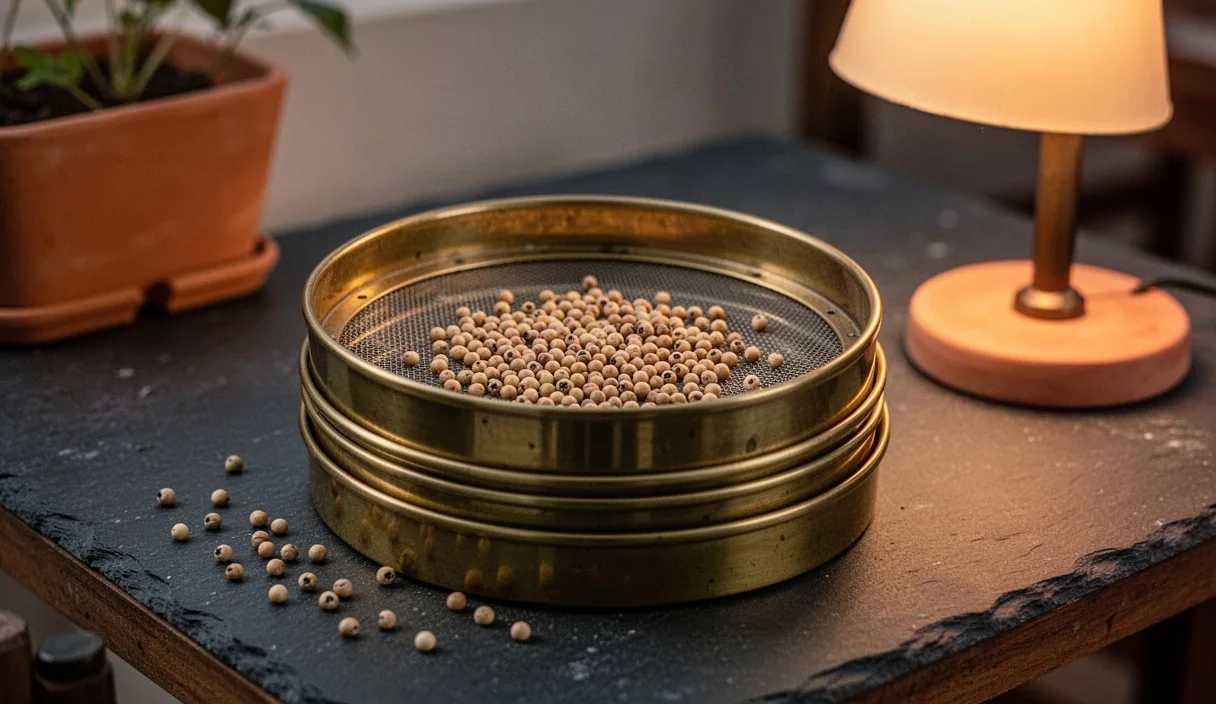

Commercial orchard propagation rarely fails at the bud-union; it fails months earlier, on the germination flats and nursery beds where uneven seedling emergence creates lifelong discrepancies in rootstock caliper. While foresters have long recognized that wild-collected seed lots exhibit broad variation in endosperm volume and embryo mass, production nurseries frequently treat open-pollinated rootstock seeds as homogenous inputs. This practice introduces avoidable inefficiencies into stratified seed lines, forcing propagation managers to discard runted seedlings or accept inconsistent graft-take across blocks of unevenly developing wood.
Mechanical seed grading addresses this variance before the first chilling units accumulate in the stratification chamber. By isolating the heaviest, fully formed propagules through physical dimension, terminal air velocity, and hydrostatic buoyancy, nurserymen can discard runts, hollow seeds, and fungal reservoirs prior to cold exposure. The following protocols outline the sequential physical separation methods required to establish uniform juvenile rootstock lines across temperate deciduous genera, balancing dimensional screening with density calibration.
Correlation Between Seed Mass and Juvenile Vigor
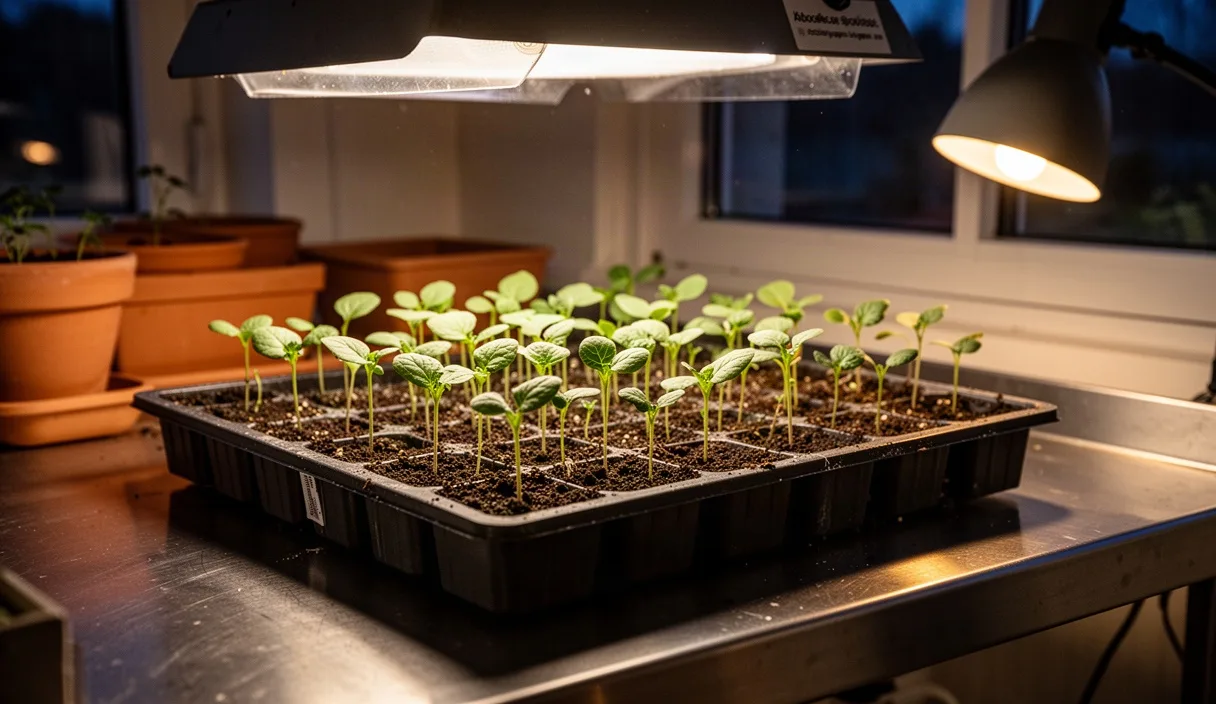
The botanical justification for mechanical grading rests on the direct physiological relationship between cotyledon reserve volume and the initial velocity of radicle extension. In species such as Prunus avium (Mazzard) and Malus sylvestris, the early growth phase relies entirely on the mobilization of lipid and protein reserves sequestered within the embryonic tissues until epigeal emergence permits autotrophic photosynthesis. When a seed lot contains an uncalibrated mix of light and heavy kernels, the emergence curve broadens over three to five weeks, exposing earlier germinants to damp-off pathogens while later germinants struggle under an established canopy.
Controlled trials among Rosaceous rootstocks consistently demonstrate that seeds falling within the upper quartile of mass achieve higher initial relative growth rates than those in lower quartiles. A typical run of wild-harvested Pyrus betulaefolia may show a broad distribution of single-seed mass ranging from 12 milligrams to 38 milligrams. Seedlings originating from the lower third of that distribution regularly fail to achieve standard budding diameter (typically 8 to 11 millimeters at soil level) within a single growing season, requiring an additional year in the field bed or premature culling before chip-budding begins.
Furthermore, juvenile vigor correlates with early root architecture. Embryos sustained by substantial nutrient reserves initiate primary taproot lignification earlier and develop denser lateral root branching during the initial 45 days post-radicle emergence. In dry or stony field soils, this initial downward drive often dictates seedling survival during early summer moisture deficits, long before nursery irrigation can fully compensate for an underdeveloped rhizosphere.
Screen Mesh Selection by Genus and Cultivar
Dimensional sorting represents the primary coarse intervention, using stacked vibrating wire or perforated metal screens to categorize clean, dry seeds into uniform fractions. The objective is not merely the removal of foreign chaff, but the isolation of uniform spherical or oblong profiles that respond predictably to subsequent aspirator handling. Screen selection must account for both round and slotted perforations, matching the transverse diameter and lateral thickness of the targeted genus.
| Genus and Cultivar/Rootstock | Primary Top Screen (Scalping) | Secondary Intermediate Screen | Bottom Screen (Sift/Drop) |
|---|---|---|---|
| Malus domestica (Antonovka) | 5.5 mm round hole | 4.2 mm slotted (width retention) | 2.8 mm round hole |
| Pyrus communis (Bartlett domestic) | 4.8 mm round hole | 3.6 mm slotted | 2.4 mm round hole |
| Prunus cerasifera (Myrobalan) | 9.5 mm round hole | 7.5 mm round hole | 5.2 mm round hole |
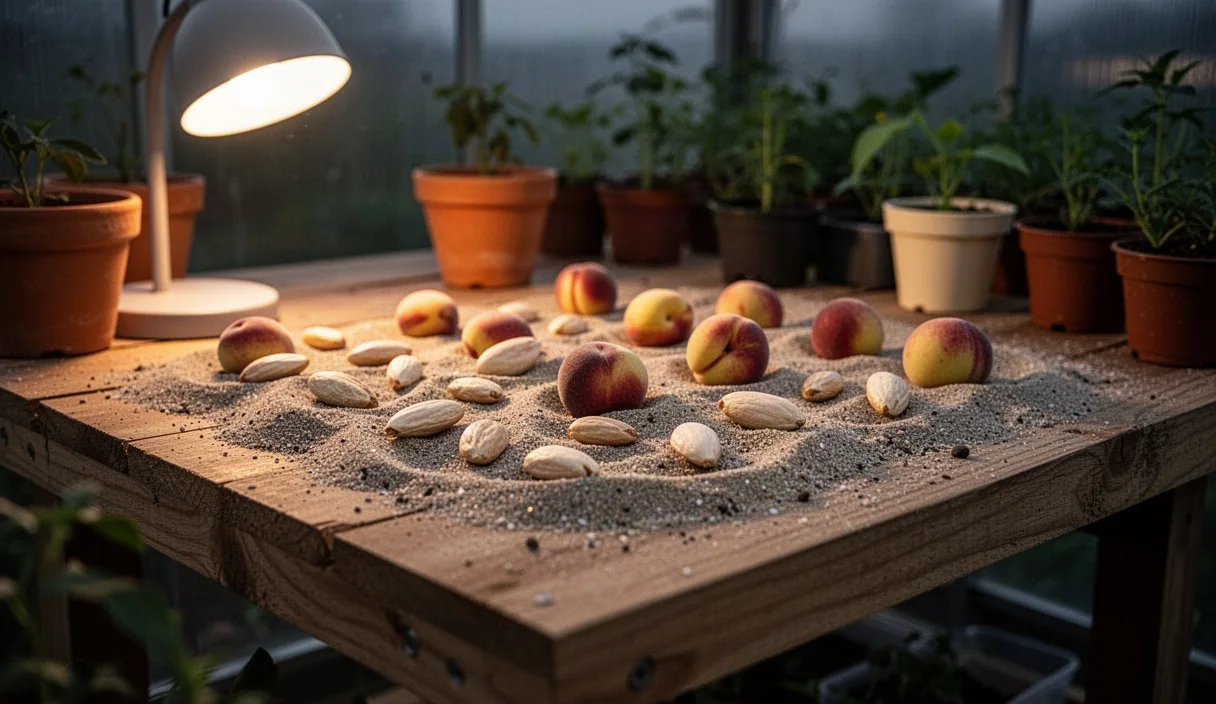
| Prunus persica (Lovell, Halford) | 19.0 mm round hole | 15.5 mm round hole | 11.0 mm round hole |
| Diospyros virginiana (Common Persimmon) | 12.5 mm slotted | 9.0 mm slotted | 6.5 mm round hole |
For stones such as peach (Prunus persica), cleaning screens must withstand substantial abrasive wear. Perforated carbon steel or heavy-gauge galvanized plate is mandatory, as woven wire meshes rapidly deform under the cyclical impact of heavy endocarps. For small pomaceous seeds, perforated zinc or brass plates prevent static buildup, which otherwise causes flattened seeds to ride along the screen edges rather than falling perpendicular to the openings.
Screen grading should divide a given provenance into three distinct fractions: oversized, target, and tailings. The target fraction normally accounts for between 68% and 78% of the bulk volume, representing the morphological mean of fully pollinated, well-nourished parent trees. Tailings, which contain aborted embryos, insect-punctured kernels, and undersized endocarps, should be discarded immediately rather than stratified alongside the primary lot.
Air-Column Separation for Density Calibration
While screen separation sorts strictly by external dimension, it cannot detect empty endocarps, internal air pockets, or partially shriveled embryos that happen to possess a broad outer hull. Air-column separation (pneumatic aspiration) resolves this limitation by levitating the seed lot against a metered, vertical airflow. Within the column, terminal velocity is a direct function of the seed's weight-to-surface-area ratio, allowing heavy, oil-dense kernels to fall through the upward draft while lighter, hollow shells are carried over the top into an expansion chamber.
Operating an industrial pneumatic aspirator requires balancing feed gate gate-opening width against fan baffle position. The intake seed flow must form a single-kernel sheet across the entire width of the air stream. If seeds enter the column in dense clusters, aerodynamic drag causes clumped light seeds to carry downward with heavy units, corrupting the clean fraction. Proper calibration relies on iterative adjustments of the air shutter until the boundary layer between the floating discard fraction and the descending dense fraction is clearly defined.
- Inspect the raw screened batch to verify relative humidity equilibrium (ideally between 8% and 12% internal kernel moisture) so that differences in water weight do not obscure true differences in embryo tissue mass.
- Set the column throat dampers to minimum airflow, introducing a slow test run of the screened target fraction through the vibratory hopper.
- Gradually open the throttle until the ascending column fluidizes the bed. Seeds should be seen bouncing within the sight glass in a buoyant, churning suspension.
- Increase the air velocity until 8% to 14% of the lightest material lifts cleanly into the collection cyclone. Collect this exhaust fraction and bisect sample seeds with a razor blade to confirm that discarded specimens contain hollow chambers or shrunken cotyledons.
- Lock the damper settings and run the batch continuously, periodically monitoring the discharge bin for contamination by lightweight hulls.
In trials with Prunus mahaleb, air-column separation following initial screening eliminates the primary vector for latent fungal transmission. Unfilled endocarps frequently harbor dormant mycelia of Fusarium and Penicillium species within their hollow interior voids, which erupt into sporulation during the extended warm-then-cold cycles of standard stratification regimes.
Flotation Assessments for Kernel Viability
Hydrostatic assessment provides an alternate or secondary method to evaluate specific gravity, particularly for stone fruits whose dense, woody endocarps obscure internal structural anomalies during pneumatic separation. When immersed in liquid, seeds with a specific gravity lower than the displacement medium float to the surface (the "floaters"), while sound, fully developed kernels sink directly to the tank base (the "sinkers").
Tap water alone (specific gravity 1.0) is sufficient for initial testing of many thick-walled species, such as Prunus dulcis or large Quercus acorns, but it is often inadequate for small-seeded pomes where surface tension can cause viable seeds to remain buoyant. Adding a non-ionic agricultural wetting agent at a concentration of 0.05% reduces surface tension, preventing microscopic air bubbles from clinging to the seed coats of sunken Malus or Pyrus kernels. For precise laboratory separations, nurseries sometimes manipulate solution density by introducing food-grade sucrose or sodium chloride, raising the fluid specific gravity to roughly 1.04 to 1.08, though residual salt must be washed away completely within minutes to prevent cellular damage.
Immersion time must be strictly governed. Extended soaks in static water initiate rapid anaerobic respiration and can leach out beneficial growth inhibitors prematurely, leading to erratic physiological responses down the line. A thorough flotation cycle should take no longer than 15 to 20 minutes from tank entry to draining. Once the floaters are skimmed off and condemned, the sinkers must be collected immediately, rinsed with clean, running water, and transferred to forced-air drying screens until the surface moisture is eliminated, preventing premature imbibition prior to the intended stratification window.
Storage Protocols for Graded Closed-Stock Batches
Once graded mechanically and sorted for density, high-value rootstock seed batches must be preserved in a physiological stasis that prevents loss of vigor before the scheduled stratification start date. The physiological condition of orthodox seeds, which includes the majority of commercially cultivated temperate fruit rootstocks, is governed by Harrington's general thumb rules: each 1% decrease in seed moisture content, and each 5-degree Celsius drop in storage temperature, roughly doubles the storage life of the seed lot, down to critical physiological thresholds.
Drying the graded seed back to an optimal moisture level is the most vital step following any wet flotation process. Drying must occur under controlled ambient conditions: air temperatures should never exceed 32 degrees Celsius, and relative humidity in the drying room should be maintained near 30% to 40%. The target moisture content for hermetic storage of Rosaceous seeds rests between 7.5% and 9.5% on a wet-basis calculation. Dropping moisture content below 5% can induce desiccation injury and physiological deep dormancy in embryos, whereas moisture exceeding 11% accelerates enzymatic respiration and supports fungal proliferation even under refrigeration.
Following equilibration to target moisture, seeds should be sealed in moisture-vapor-proof containers. Heavy 5-mil virgin polyethylene bags, heat-sealed aluminum foil laminates, or gasketed steel drums are preferred over traditional woven burlap or paper sacks. The sealed units should be organized by provenance, harvest year, and screen-grade fraction, then stored in dark cold-rooms held continuously between 1 and 3 degrees Celsius with low relative ambient humidity. In this state, carefully graded seed lines can be retained for two to four seasons without experiencing significant drops in germination percentage or juvenile radicle velocity.
Common Mistakes
- Grading moist or imbibed seeds: Attempting to run seeds through vibratory screen sorters after soaking or washing leads to rapid clogging of the screen mesh, bruising of softened seed coats, and distorted sorting metrics due to uneven moisture absorption among individual kernels.
- Overreliance on screen size alone: Assuming that large dimensions guarantee an intact kernel. Many stunted or pathogen-infected seeds achieve normal outer shell dimensions despite containing aborted or dead embryos; dimensional screening must always be paired with density separation.
- Excessive soak durations during flotation: Leaving seed submerged for hours in standing tanks without active aeration, which subjects the embryo to anoxic stress and can trigger metabolic decay or promote premature pathogen growth.
- Inadequate post-separation surface drying: Storing density-sorted seeds in sealed containers while their hulls retain ambient surface dampness, creating microclimates that foster localized mold blooms and induce erratic shallow dormancy.
- Neglecting screen wear and tear: Failing to routinely measure screen aperture tolerances with calipers. Abrasive endocarps wear down metal perforations over time, resulting in drift that allows substandard seeds into target fractions.
Next Steps for Nursery Operations
Implementing a rigorous physical seed grading program requires a systematic approach across seasonal workflows. Operators should begin by securing representative hand-cut samples of upcoming seed arrivals. Bisect a minimum of 200 seeds under low magnification to evaluate baseline embryo development, internal void ratios, and endocarp integrity before selecting specific screen sizes or setting aspirator velocities. If working with unfamiliar wild provenances or contract-collected native seed lots, submitting a sample to an accredited seed-testing station for tetrazolium viability analysis is recommended before committing significant labor to bulk physical processing.
Next, assemble and calibrate screen separators with the specific aperture profiles appropriate for your target genera, ensuring replacement screens with small-step variations (plus or minus 0.5 millimeters) are on hand to accommodate seasonal differences in seed size. Establish strict records documenting fractional recovery percentages, terminal air velocity settings, and flotation discard ratios for every named provenance. Over successive harvest cycles, this mechanical data will directly illuminate the relationship between maternal orchard performance and baseline propagation efficiency, ensuring that nursery acreage is dedicated exclusively to the most vigorous rootstock candidates.