 Sylva Botanical Journal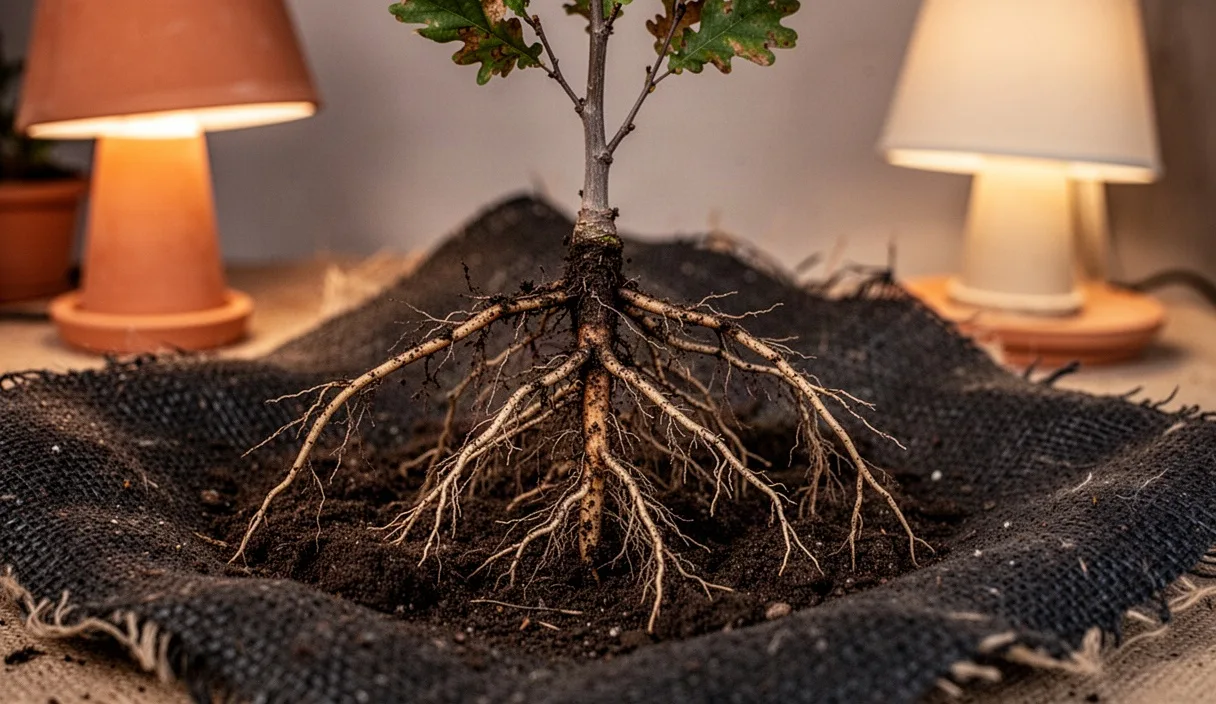

In forest nursery propagation, juvenile root morphology dictates decades of post-planting performance. The primary radicle of a newly germinated tree responds to gravitational acceleration through positive geotropism, sending a vigorous taproot downward to secure deep moisture reserves and anchor the sapling against shear wind forces. In undisturbed soil, this central root plunges vertically without lateral redirection until it meets bedrock, an impermeable hardpan, or a saturated water table. The tree relies on this singular downward axis during its first dry season to maintain hydraulic conductance while secondary and tertiary laterals colonize the upper, nutrient-rich soil strata.
When this physiological process occurs within conventional smooth-walled containers, the architecture undergoes severe disruption. As the descending taproot encounters an impermeable plastic floor, its orientation shifts horizontally, beginning a mechanical deflection that often degenerates into circling, spiraling, or upward hairpin turns. The standard solution in modern silvicultural nurseries is the air-pruning propagation bed. By suspending container cells above an open atmospheric gap, growers exploit the terminal sensitivity of the root cap to relative humidity deficits. Understanding the physical forces governing this interaction allows nursery managers to transform an aggressive downward taproot into a dense, highly branched root system without the structural defects that plague container-grown stock.
The Mechanics of Taproot Deflection in Smooth Containers
The gravitropic response of an emerging radicle is governed by sedimenting amyloplast statoliths located in the columella cells of the root cap. When a seedling is oriented upright, these dense organelles settle along the distal cell walls, directing a symmetrical basipetal flux of indole-3-acetic acid (IAA) into the elongation zone. This biochemical balance promotes uniform cell lengthening and drives the root tip strictly downward. The advancing tip can exert axial growth pressures exceeding 0.75 MPa as it probes for fissures, a mechanical force evolved to penetrate compacted subsoils.
When the root tip meets the flat, solid base of a standard polyethylene container, that mechanical thrust cannot pierce the barrier. Instead, the root cap experiences asymmetric tactile resistance. This triggers a thigmotropic override of the primary gravitropic vector. The root slips along the base, driven by the continuous elongation of cells immediately behind the apex. Once deflected toward the perimeter, the root encounters the curved interior wall of the container. With no vertical escape route, the meristem follows the path of least physical resistance, initiating a circular path around the container base.
Deflected taproots exhibit distinct structural anomalies depending on cell geometry and substrate bulk density:
- Tangential Circling: The root travels in continuous concentric rings along the base, creating a brittle coil that restricts nutrient transport and prevents the development of secondary anchors.
- Upward Deflection (Hairpinning): Upon completing a rotation, the apex climbs vertically up the container wall, reversing its natural orientation and causing irreversible vascular distortion.
- Mechanical Constriction: As the primary axis thickens through secondary cambial growth, the overlapping coils crush each other, occluding phloem transport and predisposing the mature tree to basal girdling and wind-throw several decades after field installation.
Destructive sampling of two-year-old bare-root seedlings previously started in smooth plugs demonstrates that once a taproot circles, it rarely resumes a true downward trajectory when outplanted. Even when the field soil is loose, the mechanical memory of the distorted root system persists, producing uneven rooting depths and heightened vulnerability to summer drought.
Air-Gap Physics in Raised Propagation Benches
Air-pruning systems eliminate container-induced deflection by exposing the emergent root tip to a hostile atmospheric environment. When the apex of the taproot traverses the open bottom of a suspended cell, it enters an air gap characterized by low moisture and active air currents. As ambient relative humidity at the root cap falls below approximately 78%, the delicate mucilage sheath (mucigel) dries rapidly. This desiccation halts cell division in the promeristem and causes localized necrosis of the exposed 2 to 4 millimeters of root tissue.
The effectiveness of this process depends entirely on the microclimate established beneath the propagation bench. If the bench sits too close to a damp concrete floor or poorly drained ground, water runoff collects below the trays, creating a humid boundary layer where relative humidity frequently exceeds 92%. Under these conditions, root tips do not desiccate. Instead, they bridge the gap, grow through the mesh support, and anchor themselves into standing water or floor cracks, negating the architectural benefits of the bench design.
To maintain an effective pruning zone, bench infrastructure must conform to specific physical parameters:
| System Parameter | Recommended Specification | Functional Rationale |
|---|---|---|
| Clearance Height | 45 cm to 60 cm above grade | Maintains adequate convective air movement beneath the root plane. |
| Sub-Bench Flooring | Clean, coarse gravel (20 mm) over woven fabric | Prevents standing puddles and discourages subterranean weed growth. |
| Support Mesh Aperture | 12 mm to 16 mm expanded metal | Minimizes surface contact points while providing continuous tray support. |
| Air Movement Velocity | 0.2 to 0.4 meters per second | Disrupts the stagnant boundary layer beneath cell apertures without drying the substrate core. |
When the primary meristem is desiccated, its apical dominance ceases. The accumulation of auxin at the damaged terminal zone drops, altering the balance between auxins and cytokinins. This physiological shift triggers the release of lateral root primordia situated along the pericycle of the surviving taproot axis, generating a dense network of first-order lateral roots well upstream of the pruned tip.
Irrigation Frequency Adjustments for High-Drainage Cells
Open-mesh propagation cells require an approach to water management that differs sharply from standard solid-walled plug production. Because the bottom aperture is completely exposed to moving air, water loses tension through both gravitational drainage and continuous evaporation from the exposed lower face of the substrate. Consequently, the bottom third of the container can dry to the permanent wilting point while the upper third remains saturated, creating a steep moisture gradient that risks damaging newly emerged lateral roots.
Soilless media for air-pruning systems must feature high physical stability and an open particle size distribution. A reliable formulation comprises 65% composted pine bark (screened between 3 mm and 9 mm), 20% coarse horticultural perlite, and 15% long-fiber sphagnum moss. This blend provides total porosity near 72%, with an air-filled porosity of roughly 28% at field capacity. This prevents waterlogging near the surface while maintaining capillary continuity toward the base.
Irrigation must be applied in brief, disciplined cycles to account for the rapid percolation rate of these coarse mixes. Large, infrequent applications waste water and flush mobile nutrients such as nitrates and boron through the open base. A split-volume irrigation schedule maintains uniform moisture across the vertical profile of the cell:
- Hydration Pulse: Apply an initial run of 1.5 to 2.5 liters per square meter early in the morning to break surface tension and rehydrate the upper organic particles.
- Core Saturating Cycle: Follow thirty to forty-five minutes later with a primary volume of 4.0 to 6.0 liters per square meter, allowing water to percolate through the entire root zone until light dripping is observed across the bench underside.
- Midday Maintenance: On days when ambient temperatures exceed 28 degrees Celsius and vapor pressure deficits rise, execute a short cycle (approximately 1.0 liter per square meter) to replenish evaporation losses at the open base without saturating the container mass.
Lateral Branching Densities Across Hardwood Species
Not all hardwood species respond to taproot pruning with the same vigor or morphological pattern. The rate of lateral root emergence depends on the natural growth habit of the seedling, specifically the number of protoxylem poles present in the primary root and the strength of the genetic programming governing apical dominance.
Species characterized by an absolute taproot habit, such as the genus Carya (pecan and hickories), display strong hormonal control. When the primary radicle is pruned, lateral development often clusters narrowly within the 20 millimeters immediately above the necrotic tip, requiring deliberate container depth adjustments to distribute roots evenly throughout the plug. Conversely, species within Quercus (oaks) and Castanea (chestnuts) show a broader, more diffuse lateral activation, colonizing the entire cell volume with fibrous feeder roots once the main apex is arrested.
| Hardwood Species | Primary Root Dominance | Mean Lateral Count per 10 cm Axis | Optimum Air-Pruning Cell Depth |
|---|---|---|---|
| Quercus alba (White Oak) | Moderate to High | 18 to 26 | 150 mm to 180 mm |
| Quercus rubra (Northern Red Oak) | Moderate | 22 to 31 | 130 mm to 150 mm |
| Juglans nigra (Black Walnut) | High | 12 to 17 | 180 mm to 220 mm |
| Carya ovata (Shagbark Hickory) | Very High | 8 to 14 | 200 mm to 250 mm |
| Castanea dentata (Chestnut) | Moderate | 24 to 34 | 120 mm to 150 mm |
For high-dominance species like Juglans nigra and Carya ovata, shallow propagation cells produce poor results. If the radicle meets the air gap after traveling only 70 or 80 millimeters, the seedling lacks the physiological leaf area and photosynthetic reserves needed to support secondary lateral growth. The resulting root plug remains weak and fragments during field handling. Matching cell depth to the morphological vigor of the species ensures the primary root achieves sufficient volume before the apical meristem is arrested.
Handling Roots During the Transition to Field Rows
Seedlings produced in air-pruning systems possess an exposed, fibrous outer root structure that is sensitive to handling errors during outplanting. In a solid plastic container, an exterior sheath of coiled roots provides a buffer that temporarily insulates the inner root core from immediate dehydration. Air-pruned plugs lack this protective circling barrier; their hundreds of exposed first- and second-order lateral tips can dry out quickly upon removal from the cell.
Extracting plugs from modular trays requires careful attention to timing and substrate moisture. Trays should be irrigated thoroughly approximately four to six hours before extraction. This ensures the substrate holds together around the root system without being heavy, muddy, or prone to slumping.
The transition protocol should follow a careful, step-by-step sequence:
Extracting the Root Plug
Apply even upward pressure from the base of the cell using a dedicated extraction pin-block. Pulling seedlings out by the stem collar damages the phloem and strips lateral roots away from the primary taproot axis, particularly in juvenile oaks whose lignification is incomplete.
Protecting the Root Plugs During Staging
Transfer extracted plugs immediately into transport crates lined with wet burlap or closed-cell foam inserts. Direct exposure to solar radiation and ambient wind can desiccate fine root tips within eight to twelve minutes if relative humidity is low. If transport to the field takes more than two hours, mist the packed crates lightly with clean water.
Excavating and Preparing the Soil Slot
Prepare the field furrow or augered hole to a depth precisely matching the height of the plug. Glazed sidewalls caused by power augers in heavy clay soils must be scored with a planting spade. Failure to break this glazed surface recreates the smooth-container effect within the field soil, trapping the newly formed lateral roots inside the planting hole.
Positioning and Consolidating the Backfill
Lower the seedling into the planting hole, ensuring the root plug sits completely plumb and the root collar aligns exactly with the surrounding grade. Fill the surrounding void with pulverized native soil, tamping firmly around the lower two-thirds of the plug to eliminate air pockets. Do not step heavily around the collar, as excessive foot compaction shears off the tender lateral roots developing along the upper five centimeters of the taproot.
Common Pitfalls in Air-Pruning Operations
Nursery operators often struggle with air-pruning beds due to small setup mistakes that undermine the system. The most frequent errors stem from bench design compromises or an incomplete understanding of container hydrology.
- Insufficient Bench Clearance: Elevating benches only 15 cm to 20 cm above the ground creates a high-humidity pocket beneath the trays. As a result, taproots fail to desiccate, extending across the bench mesh and tangling adjacent cells together.
- Substrate Compaction During Tray Filling: Mechanically packing coarse bark media into air-pruning cells destroys macro-pore connectivity. This reduces drainage and can cause an anaerobic zone near the base of the plug, which rots root tips rather than air-pruning them.
- Excessive Wind Exposure: Placing raised beds in open, windy corridors dries the outer perimeter trays much faster than the interior rows. This uneven moisture level causes variable root development across the batch. Windbreaks that reduce gusts to a gentle breeze (0.3 meters per second) preserve uniform air pruning without creating stagnant air.
- Extended Staging in Trays: Leaving saplings in air-pruned trays past their target size causes the dense lateral root cage to lignify heavily within the small volume. This root-bound condition stalls vegetative growth once the sapling is planted out in field rows.
Practical Next Steps for Nursery Managers
Growers looking to upgrade from solid-walled containers should begin by auditing their nursery bench infrastructure. Measure the clear vertical distance between the bottom of the tray support and the underlying ground surface across all propagation bays. Where clearance measures less than 45 cm, elevate the bench legs on concrete piers or reconstruct support frames to establish an adequate convective air column.
Next, evaluate existing growing media through a simple drainage and settling test. Pack three test containers with the production mix, saturate them completely, and measure the percolation time alongside the volume of water drained after thirty minutes. If the air-filled porosity falls below 22%, reformulate the mix by increasing the proportion of composted bark or coarse perlite while reducing fine peats and sands.
Finally, establish a destructive sampling schedule to track root morphology as the season progresses. Sacrifice four to six seedlings from representative hardwood batches every three weeks. Wash the substrate away from the roots using a gentle water bath and inspect the primary axis. The taproot should terminate cleanly at the cell base, flanked by evenly distributed lateral root branches growing outward. If taproots show signs of curling, flattening, or emerging past the cell base, adjust the bench height, air circulation, and irrigation cycles before starting the next production round.